Access for every eligible voter.
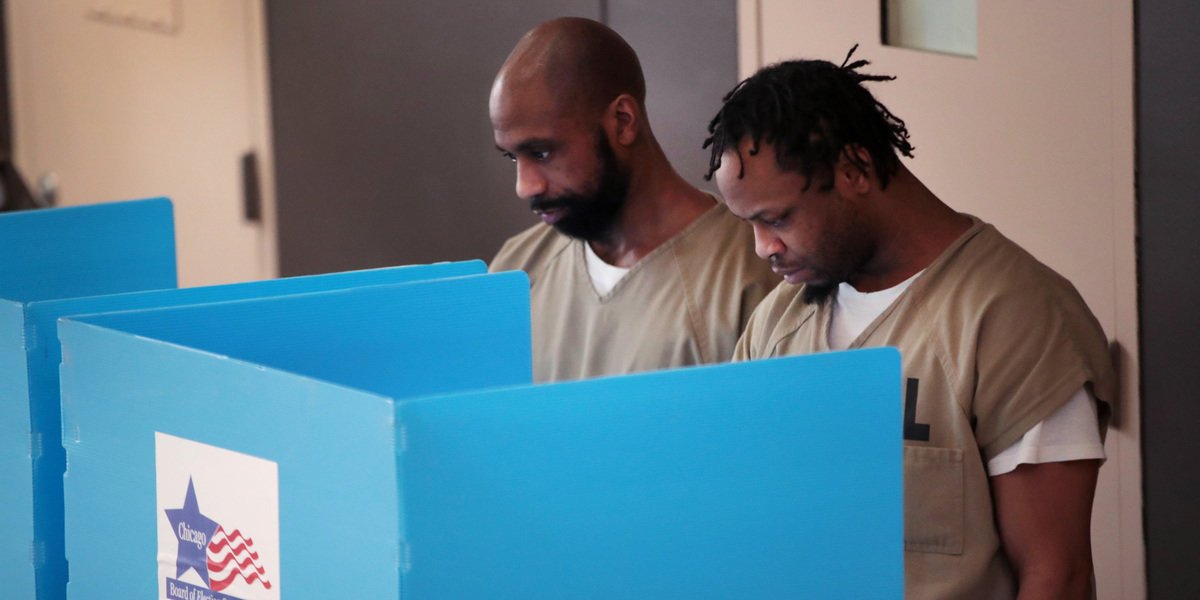
Most US citizens who are incarcerated in local jails are eligible to vote. Pretrial incarceration does not affect voting rights, and in most states, neither do misdemeanor convictions. And yet, research shows that even short periods of incarceration can reduce a person’s chances of participating in the next election - even if they never formally lose their rights.
Incarceration creates several barriers to voting. In some states, voters need an ‘excuse’ to vote by mail, and incarceration isn’t mentioned in the law. Some impose burdensome requirements, like getting a ballot notarized, that are functionally impossible for incarcerated voters to meet without outside help. Facility mail systems are notoriously slow, high-quality information about elections and candidates is sparse, and many jail officials are misinformed about incarcerated peoples’ rights.
The good news is, all these problems are solvable:
Voters who are contacted in advance of an election are more likely to vote
> VBMIJ partners with on-the-ground organizations to make connections with incarcerated voters and help them through the processVoters who have access to information feel empowered to make their own choices
> VBMIJ’s nonpartisan voter guides include detailed how-to’s, deadlines, contact information, and tips for learning more about candidates using the resources available to incarcerated peopleJails that promote voting see higher turnout
> VBMIJ helps partners approach jail administrators with all the information they need and create a plan that actually works in their communityOur mission is simple: access for every eligible voter. Democracy is a team sport, and when more of us participate, we all win.
Ready to partner with us? Get in touch here